As an Amazon Associate, this website earns from qualifying purchases.
The short answer
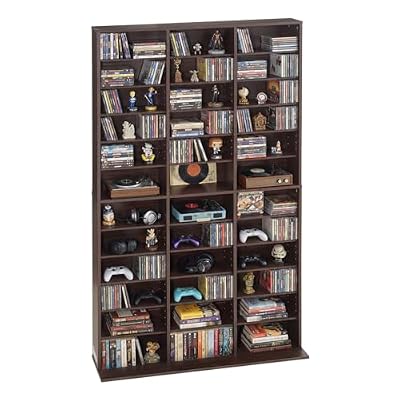
Measure your shelf depth and count your cases before you buy. A standard DVD case is 14mm thick, so a foot of shelf holds about 21 DVDs or 25 Blu-rays. Pick a narrow tower for under 150 discs and a full bookcase or binders past that.
A dvd bookshelf only works if it fits the cases you own and leaves room for the ones you will buy next. Most storage mistakes come from skipping the tape measure.
#1. Furinno Jaya 9-Shelf Media Tower: best narrow tower
Keep in mind: holds less than a closed cabinet of the same height
Product details checked September 2026
It has five sloped shelves and fabric drawers at the base.
Factors to consider when choosing a DVD bookshelf
Measure first: case sizes and discs per foot
Disc cases come in a few standard sizes. A standard DVD case is 190 by 135 by 14mm, per the Maxtek replacement case listing. A standard Blu-ray case is shorter and thinner, about 6.75 by 5.25 inches and 12mm thick.
That thickness sets how many discs fit on a shelf:
DVD cases (14mm): about 21 per foot of shelf
Blu-ray and 4K cases (12mm): about 25 per foot of shelf
Slim cases (7mm): about 43 per foot of shelf
Box sets and SteelBooks: measure each one, since sizes vary
To size a shelf, count your cases by type, divide by the per-foot number, and add about a third for growth. A collection of 300 DVDs needs roughly 14 feet of shelf, plus room to grow.
Shelf depth and height
A DVD case is 135mm wide, which is about 5.3 inches. That is the depth it needs when it stands spine-out. A shelf about 5.5 to 8 inches deep fits cases with little wasted space.
Standard bookcases often run 10 to 12 inches deep. That leaves a gap behind every row. Some collectors fill it with a second row, but the back row is then hard to see and browse.
Height matters too. A DVD case stands about 7.5 inches tall, and a Blu-ray case about 6.75 inches. Adjustable shelves let you fit more rows in the same frame, which is why most media towers use them.
Tower, bookcase or binder
Each storage type suits a different collection size.
A narrow media tower holds one stack of cases per shelf. It fits in a corner and keeps every spine visible. It suits collections of up to about 150 discs.
A full bookcase or media cabinet holds several stacks per shelf. It suits a few hundred discs or more. Look for adjustable shelves and a wall anchor, since a loaded case is heavy.
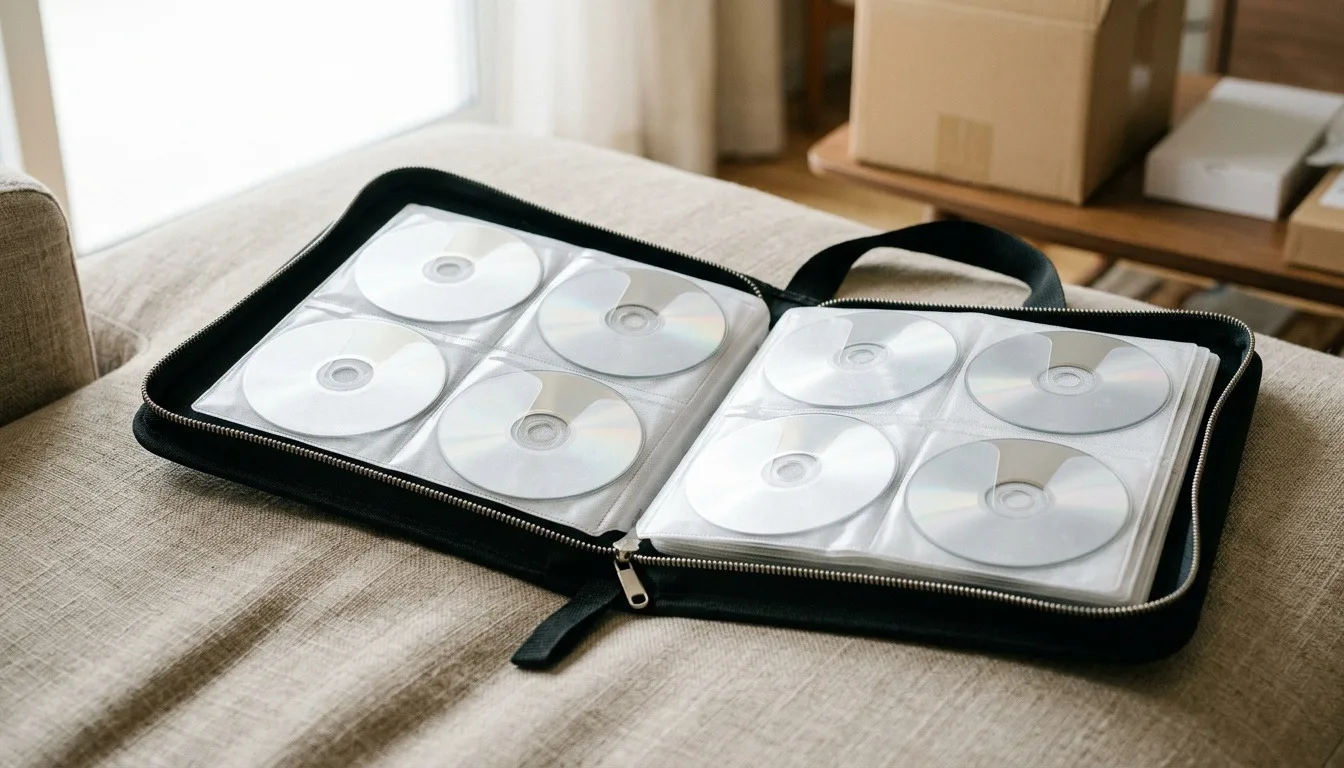
A disc binder stores discs in sleeves and drops the cases. It holds far more discs per inch of shelf. It suits everyday discs, road trips and overflow. Our DVD holder guide covers binders, wallets and small racks in detail.
Planning for box sets and SteelBooks
Box sets and SteelBooks break the per-foot math. A TV season box can be two or three times as thick as a single case. A SteelBook is a metal case with its own size, and some come in a slipcover.
Give these their own shelf, set to the height of your tallest item. It keeps odd sizes from breaking up your main rows. It also keeps heavier metal cases off the thin upper tiers of a tower, which often carry less weight than the bottom shelf. Check the listed weight limit for each tier before you load it.
Sorting the shelf once it is full
A simple system keeps a big shelf easy to use:
Split by format first: DVD, Blu-ray, 4K, then box sets and SteelBooks.
Alphabetize within each format, by title or by director, whichever you search by.
Keep a running list in a spreadsheet or app once scanning the shelf gets slow.
Sorting by format first keeps each shelf a single case height, which wastes less space. It also puts your 4K discs in one place when you want the best picture.
Protecting discs on the shelf
Stand cases upright rather than stacking them flat. A tall flat stack puts weight on the bottom cases and can crack the hinges.
Keep the shelf out of direct sunlight, which fades printed artwork over time. Avoid spots next to heaters and vents too. If a case cracks, a new one costs little. Our DVD covers guide covers replacement cases and sleeves.
Where a DVD bookshelf fits with the rest of your setup
Storage sits next to your player and TV in most rooms. If you are still choosing a player, the blue ray player guide covers which machines play DVD, Blu-ray and 4K. If you add discs every month, the DVD and Blu-ray release schedule shows what ships next, which helps you plan shelf space.
More in this guide
DVD holder: binders, wallets and small racks for discs without their cases
Verdict on choosing a dvd bookshelf
Pick a dvd bookshelf by the numbers. Count your cases, allow about 21 DVDs or 25 Blu-rays per foot, and add a third for growth. A narrow tower suits a small collection, a full cabinet suits a large one, and binders handle overflow. Measure depth and height before you order, and anchor any tall unit to the wall.
A standard DVD case is 14mm thick, so a 12-inch run holds about 21 cases. Blu-ray cases are 12mm thick, so the same run holds about 25.
How deep should a DVD bookshelf be?
A DVD case is 135mm wide, which is about 5.3 inches. A shelf about 5.5 to 8 inches deep holds cases spine-out without much wasted space.
Is a regular bookcase OK for DVDs?
Yes, but most bookcases are 10 to 12 inches deep, so half the depth goes unused. Some collectors put two rows on a deep shelf, which hides the back row.
Should I keep the cases or move discs into a binder?
Keep the cases for anything collectible, since the case, artwork and inserts affect resale value. A binder works well for everyday discs where space matters more.