
Sony DVPSR510H DVD Player with HDMI
Our verdict:
Best all-round DVD player
Best for playing DVDs on a modern HDMI TV
View Product DetailsKeep in mind: Sony notes it is not a Blu-ray player
Players
We may earn a commission from some links on this page.
The short answer
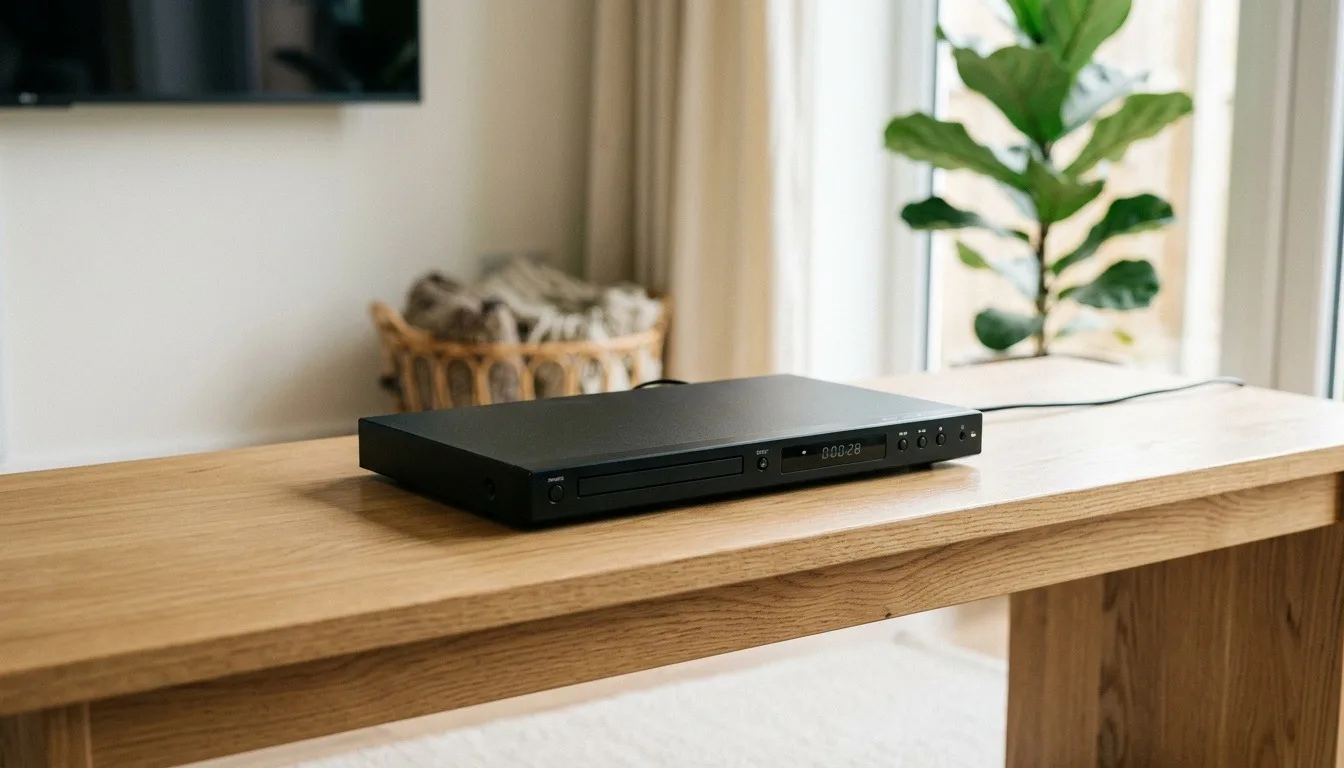
A dedicated DVD player only makes sense for a tight budget or a legacy setup. For most buyers, a Blu-ray or 4K player costs little more and plays every DVD too, so it is the safer long-term buy.
Shopping for a dvd player in 2026 usually comes down to one question. Do you actually need DVD-only, or would a Blu-ray player serve you just as well for a small price difference?
Sony DVPSR510H DVD Player with HDMI
Our verdict:
Best all-round DVD player
Best for playing DVDs on a modern HDMI TV
View Product DetailsKeep in mind: Sony notes it is not a Blu-ray player
The Sony DVPSR510H has an HDMI output with 1080p upscaling. Sony lists it as Region 1 and notes it is not a Blu-ray player.
Keep in mind: no HDMI, so it is a poor match for a modern TV
The Sony DVPSR210P has no HDMI port. It connects with AV cables, which suits an older TV.
Our verdict:
Best multi-region DVD player
Best for playing DVDs bought outside the US
View Product DetailsKeep in mind: a DVD player only, so it cannot play Blu-ray
The Philips HDMI DVD player is listed as playing DVD regions 1 to 6, with 1080p upconversion and a USB input.
Sony BDP-S1700U Blu-ray Player
Our verdict:
Best step up to Blu-ray
Best for a simple, low-cost step up from a DVD player
View Product DetailsKeep in mind: does not play 4K Ultra HD Blu-ray
The Sony BDP-S1700U plays Blu-ray and DVD, for buyers who want room to grow.
For the full buying checklist, see our blue ray player guide.
A DVD-only player makes the most sense in two cases. One is a genuinely tight budget where every dollar counts. The other is a legacy home theater setup with no plans to add Blu-ray or 4K discs. Outside those two cases, the small price step up to a Blu-ray player usually pays for itself.
A DVD player outputs standard-definition video natively. Many players upscale that image to fill a modern HD or 4K screen. That improves sharpness but adds no real detail the original disc never had. A DVD disc has a real resolution ceiling no player can push past, if picture quality matters to you.
Most current dvd players connect over HDMI. That single cable carries both video and audio. Older or budget models sometimes still include composite or component outputs for legacy TVs. Check which output your TV actually supports before assuming HDMI is available on every model.
Some players also include a coaxial or optical audio output for routing sound to a separate receiver instead of through the TV. If you run a dedicated sound system, check for that output before you buy, since not every budget model includes it.
Most modern players handle common burned-disc formats without issue. Support still varies by brand and disc type. Region locking matters less for DVD than for Blu-ray. Most DVD players sold in the US play region 1 discs without restriction. An imported DVD from another region can still cause playback issues, so check before ordering from outside the US.
Every Blu-ray player plays standard DVDs. Choosing Blu-ray over DVD-only rarely costs you anything in compatibility. It only costs a small price difference. If your collection has any chance of growing beyond DVD, that small extra cost buys real flexibility later.
A dvd player's remote is worth a quick check before you buy, especially for an older relative or a shared household setup. Some budget remotes cram too many small buttons into a cramped layout. That frustrates anyone not already familiar with disc-player menus. A simpler remote with clearly labeled play, pause and menu buttons is worth a small trade-off in features for anyone setting this up for someone else.
A dedicated dvd player fits a small, DVD-only collection or a tight budget best. For most other buyers, a Blu-ray or 4K player costs little more and plays every DVD too, making it the safer long-term choice.
Yes, for a small, DVD-only collection or a tight budget. For anyone likely to add Blu-ray or 4K titles later, a player that covers all three formats is the better long-term buy.
No. A DVD player outputs standard definition, though many players upscale that image toward HD on a modern TV. Upscaling improves clarity but does not add real detail.
Most modern players handle common burned disc formats, but compatibility varies by brand and disc type. Check the specific model's supported formats before assuming.